When Should a Business Rekey Their Locks?
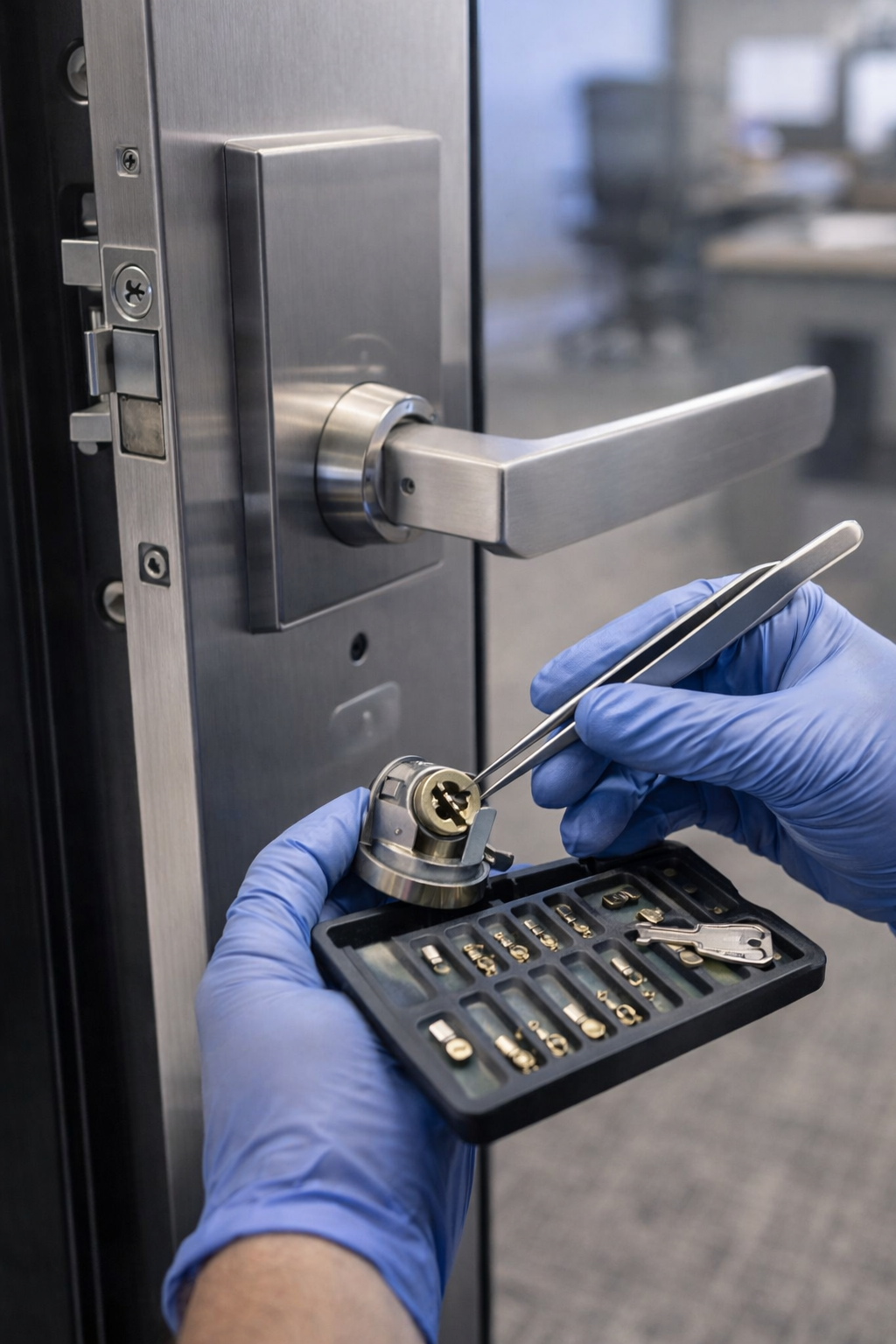
Security is one of the most important responsibilities for any business owner or property manager. One of the most overlooked — yet essential — services is rekeying your locks.
Rekeying allows you to change who has access to your property without replacing all your hardware, making it a fast and cost-effective way to maintain control.
What Does Rekeying Mean?
Rekeying is the process of adjusting the internal pins of a lock so that old keys no longer work, while new keys are issued.
The lock itself stays in place — only access changes.
This is often the smartest solution when security needs to be updated quickly.
When Should a Business Rekey Their Locks?
After Employee Turnover
If an employee leaves — especially unexpectedly — there’s no way to guarantee copies of keys weren’t made. Rekeying restores full control immediately.
After Moving Into a New Space
You never know how many previous tenants, vendors, or contractors still have keys. Rekeying ensures you start with a clean, secure system.
Lost or Unreturned Keys
Lost keys create uncertainty. Rekeying eliminates that risk without needing to replace every lock.
Security Policy Updates
Many businesses rekey periodically as part of a proactive security plan, especially in high-traffic environments.
After a Break-In or Security Concern
Even if locks weren’t damaged, rekeying ensures previous access points are no longer valid.
Rekeying vs. Replacing Locks
Replacing hardware is only necessary when locks are damaged, outdated, or being upgraded.
Rekeying is:
- Faster
- More affordable
- Less disruptive
- Ideal for maintaining existing commercial-grade hardware
Benefits of Professional Commercial Rekeying
A professional locksmith can:
- Match multiple locks to a single key (keyed alike)
- Create structured master key systems
- Ensure smooth lock operation after rekeying
- Maintain compliance with commercial hardware standards
A Smart Preventative Security Step
Many businesses wait until there’s a problem — but rekeying is most effective as a preventative measure.
Maintaining control over who has access protects employees, inventory, and operations without requiring major changes to your doors or hardware.
If your business has experienced staffing changes, lost keys, or a new move-in, rekeying is one of the fastest ways to restore complete security.